
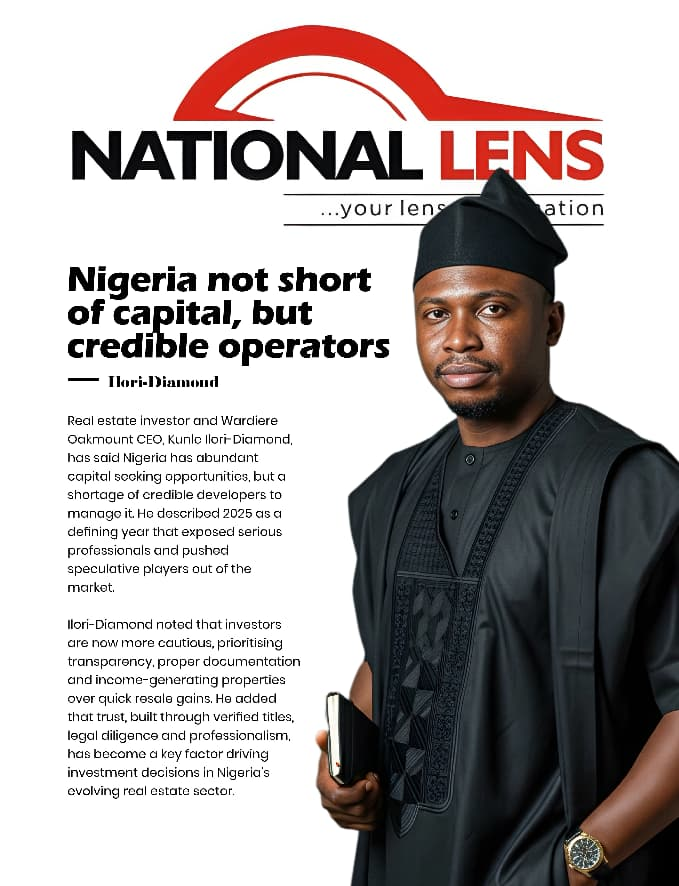
Interviewer: 2025 has just wound up. How was the year for business?
Kunle: 2025 was a defining year for business, not an easy one, but a deeply instructive and ultimately
rewarding one. It was a year that tested discipline, resilience, and strategic clarity.
Operating within an environment shaped by inflationary pressure, currency volatility, and cautious capital flows, we deliberately shifted focus from aggressive expansion to value
creation, asset quality, and long-term positioning.
Despite the headwinds, we closed the year stronger, with leaner operations, better-structured transactions, and deeper trust from clients and investors. In many respects, 2025 separated speculative operators from true professionals, and that distinction worked in our favour.
Interviewer: You returned to Nigeria and seem to have done a lot within a short time. How is the business faring locally?
Kunle: Nigeria remains one of the most dynamic markets in Africa; challenging, yes, but exceptionally rewarding for those who understand its nuances.
Nigeria is one of the few places in the world where real demand still clearly outpaces supply. That single fact changes everything.
Since returning, the business has fared well because the fundamentals are undeniable. Nigeria has a population of over 200 million people, rapid urbanisation, a growing middle class, and massive infrastructure gaps. In real estate and investment generally, those gaps are commercial opportunities.
Here, I am aware that capital does not struggle to find use; it struggles to find credible operators. When you bring structure, compliance, proper documentation, and execution discipline, you immediately stand out. We’ve seen this firsthand. Projects that would take years to gain traction elsewhere achieve uptake quickly here because people are actively looking for solutions; homes, offices, warehouses, hospitality, and income-yielding assets.
Returns are also very real. Entry prices are still relatively low compared to peer , while rental yields and capital appreciation remain strong when projects are correctly located and priced. Add to that a young, trainable workforce, improving digital systems, and increasing government focus on infrastructure, and the picture becomes clearer.
Nigeria is not a market for spectators or shortcuts. It is a market for investors who understand execution and risk pricing. For those people, the opportunities are measurable, bankable, and already happening.
Since my return, the priority has been institutionalising our operations, strengthening governance frameworks, and aligning our structures with global best practices. Rather than chasing volume, we focused on credibility, systems, and sustainability.
The market response has been encouraging, particularly from Nigerians in the diaspora and institutional partners seeking credible platforms. The business is doing well; not because the terrain is easy, but because we approach it with patience, data, and integrity.
Interviewer: How would you assess Nigeria’s real estate market today compared to two or three years ago?
Kunle: The market today is far more price-sensitive, risk-aware, and deliberate than it was two or three years ago.
Speculative buying has reduced significantly, while end-user demand and income-backed investments have become more dominant. Construction costs have risen sharply, financing has tightened, and developers are now forced to rethink design efficiency, project phasing, and capital structure.
That said, real estate remains one of the most resilient asset classes in Nigeria. The sector hasn’t weakened; it has matured. Today’s winners are those who understand location fundamentals, realistic demand, and disciplined financial structuring.
Interviewer: What role can real estate play in addressing Nigeria’s housing deficit?
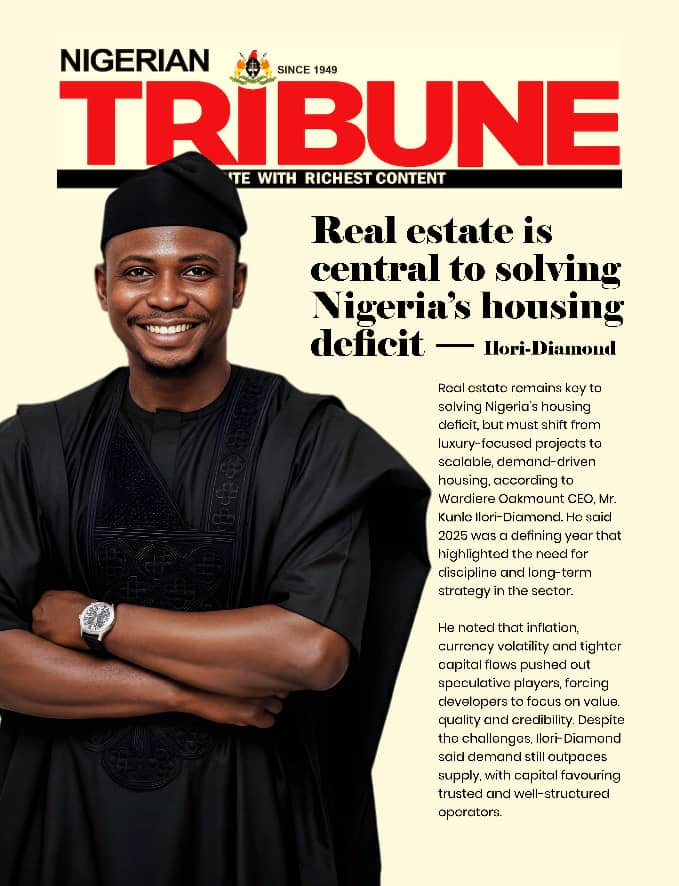
Kunle: Real estate is central to solving Nigeria’s housing deficit, but it must evolve beyond luxury-led development alone.
The real solution lies in public-private partnerships, land banking reforms, access to long-term financing, and scalable mass-housing models that prioritise efficiency over excess. We must also rethink construction technology, alternative building materials, and approval timelines.
Housing is not merely a social obligation; it is a powerful economic multiplier. When done correctly, it creates jobs, builds household wealth, and stabilises communities.
Interviewer: Property prices continue to rise. What does this mean for affordable housing?
Kunle: Rising property prices reflect increased infrastructure costs, land scarcity in urban centres, and inflationary pressure. However, affordability cannot be ignored.
What this means is that affordable housing must be intentionally designed, not expected to emerge organically from premium markets. The future lies in satellite cities, smarter density planning, modular construction, and innovative financing models such as rent-to-own and cooperative housing schemes.
Affordability is achievable, but it requires deliberate policy alignment and disciplined development strategies.
Interviewer: You operate largely from Abuja. How do government policies and land administration affect real estate investment?
Kunle: Government policy and land administration are among the most influential variables in real
estate investment.
In Abuja, clarity of land titles, consent processes, and development control directly affect project timelines and overall costs. Positive reforms improve investor confidence, while bureaucratic delays introduce risk premiums.
Encouragingly, gradual improvements are emerging through digitalisation and stakeholder engagement. However, consistency, transparency, and predictability remain critical to unlocking larger capital flows.
Interviewer: Foreign buyers often fall victim to fraud. How do you secure foreign trust?
Kunle: Trust is built through structure, transparency, and proven track record.
We ensure every transaction is supported by verifiable titles, independent legal due diligence, escrow arrangements, and clear reporting standards. For foreign and diaspora clients, governance is non-negotiable; audited processes, site verification, milestone-based payments, and constant communication.
In a market where trust can be fragile, professionalism becomes the strongest currency.
Interviewer: Are your operations still focused mainly on the premium and luxury segment?
Kunle: While we are well-established in the premium and luxury segment, our strategy is not rigid.
Consumer preferences are evolving, and we are responding with diversified offerings that balance aspiration wit practicality. Luxury will always have a market, but today’s buyers also prioritise efficiency, security, sustainability, and long-term value.
Our focus is less on price points and more on product-market fit.
Interviewer: What impact is technology having on your operations and real estate value creation?
Kunle: Technology is reshaping real estate across the entire value chain; from digital land searches and virtual inspections to data-driven pricing and intelligent facility management.
Internally, it has improved operational efficiency and decision-making. Externally, it has enhanced transparency and customer experience. Going forward, developers who leverage technology will not only build faster; they will build smarter.